Ideal for jungle, Nature Aquarium, and forest-style aquascapes
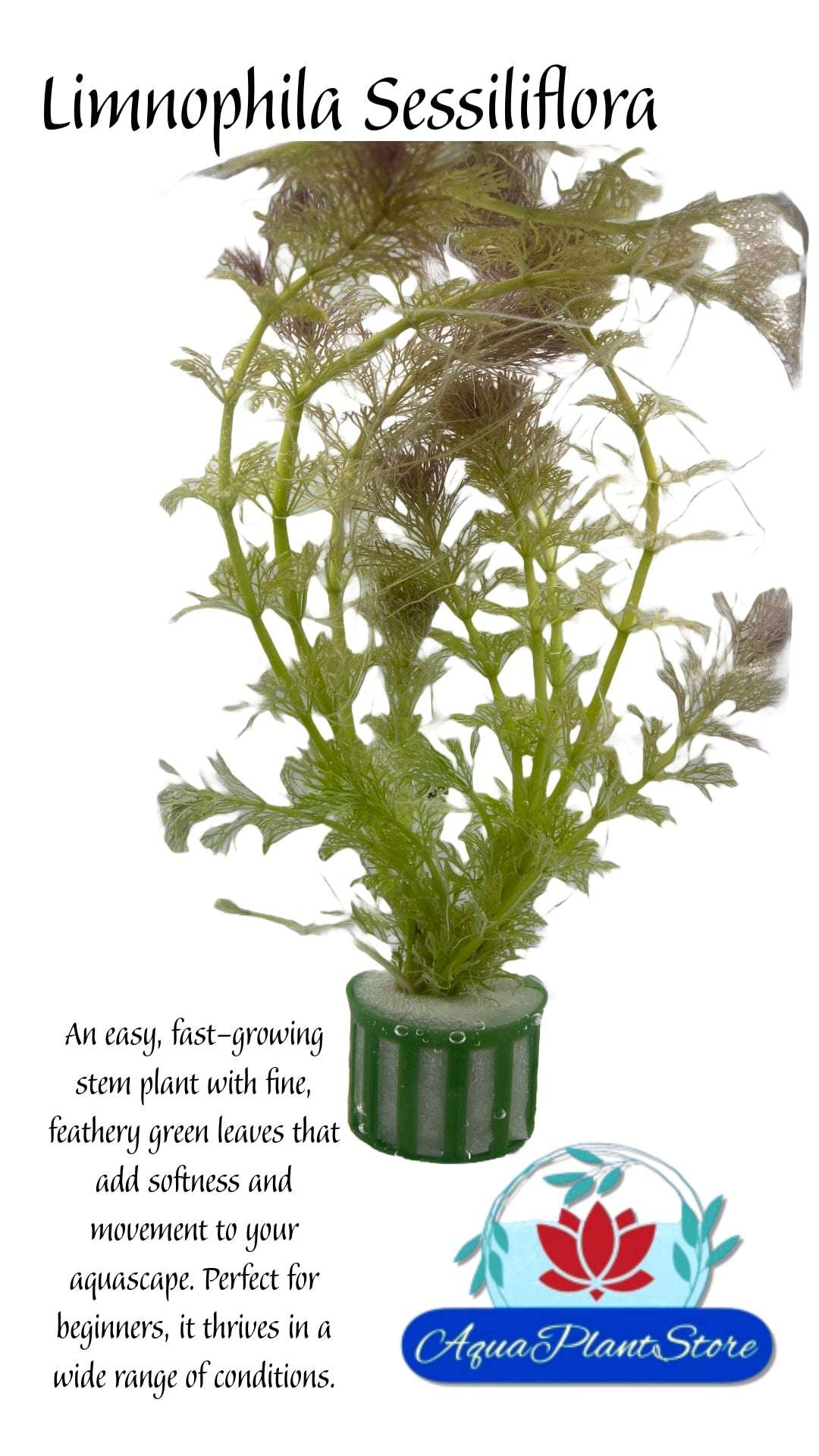
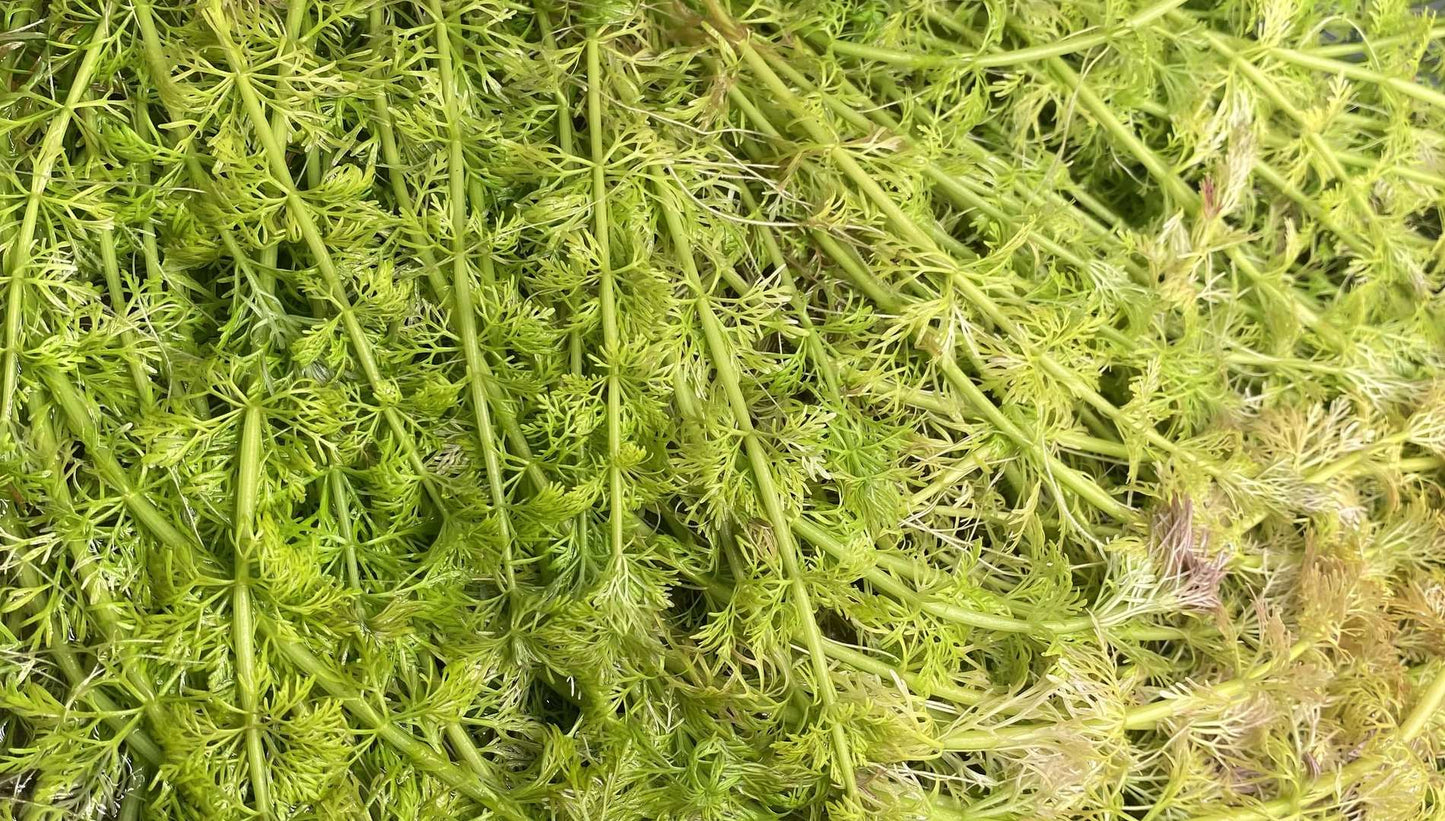
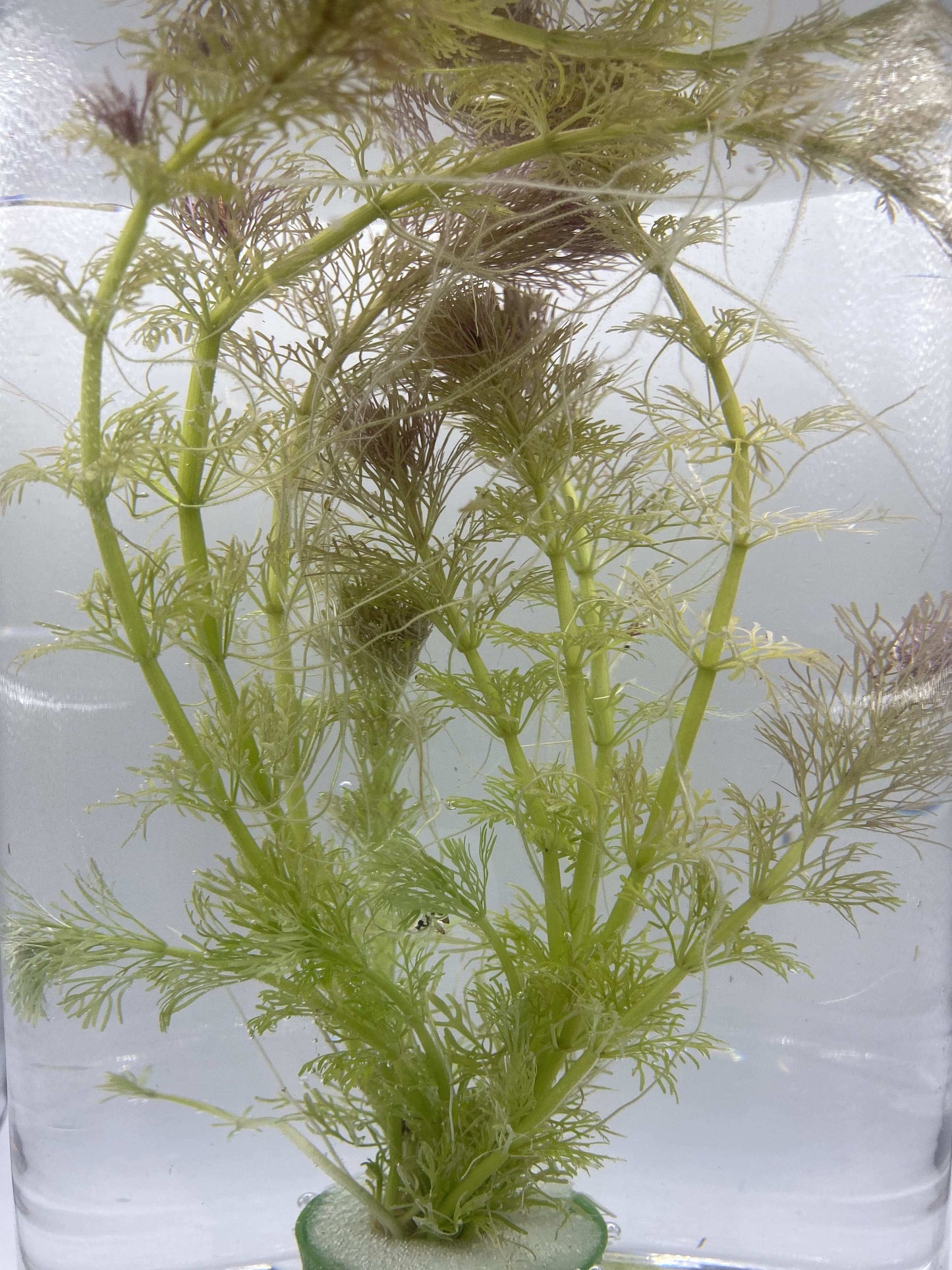
Its dense feathery stems create lush green backgrounds.
Great for beginner planted tanks
This plant grows easily in a wide range of aquarium setups.
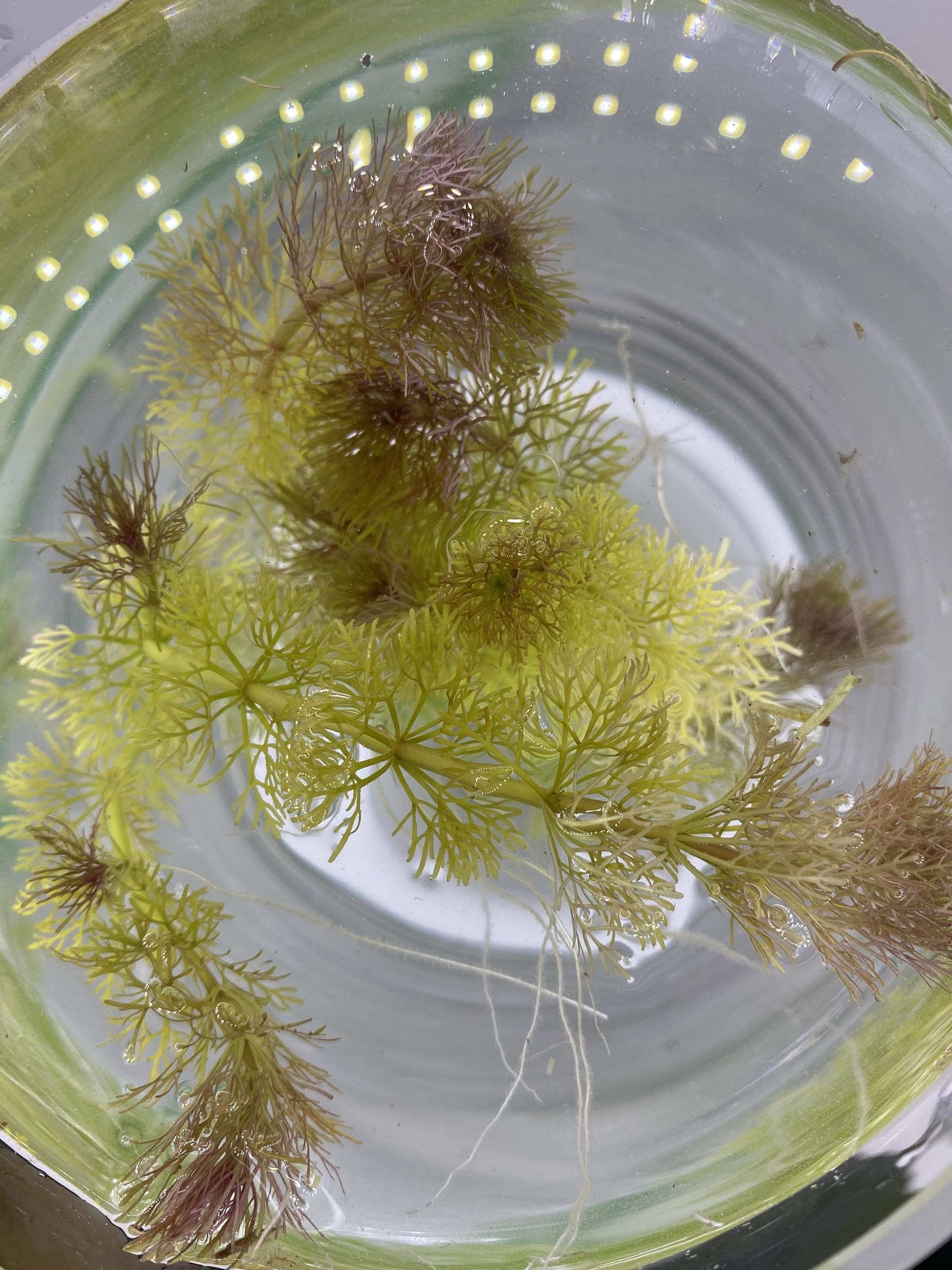
Soft pine-like foliage
The delicate leaves add natural texture to planted layouts.
Rapidly forms thick plant clusters
Healthy stems quickly build dense background vegetation.
Creates natural hiding spaces in aquascapes
The dense foliage adds depth and shelter within planted tanks.
Origin: Southeast Asia
Type: Stem plant
Growth Rate: Fast
Size: Height: 20–40 cm (8–16 in) Width: 5–10 cm (2–4 in)
Natural Habitat: This species grows in calm tropical waterways such as ponds, canals, and flooded fields where warm temperatures and steady sunlight promote rapid vertical growth.
Special Considerations: Frequent trimming encourages dense, bushy growth. Good circulation helps keep the delicate leaves free from debris.
Did You Know?
Limnophila sessiliflora is often compared to Cabomba because of its soft, feathery leaves. However, it is far more tolerant of different water conditions, which is why many aquarists use it as a beginner-friendly alternative to Cabomba species.
Tank Size: 20 L (5 gallons) or larger recommended.
Plant Placement: Often planted in the background, where its feathery foliage forms soft underwater bushes. It pairs nicely with plants such as Ludwigia repens or Rotala indica, while broad-leaf plants like Anubias barteri can add structural contrast in the midground. Foreground plants such as Marsilea hirsuta help create a gradual transition toward the front of the aquarium.
Compatibility: Works well with peaceful fish including celestial pearl danios, ember tetras, Corydoras, shrimp, and snails. The delicate leaves create excellent hiding spaces for shrimp colonies and small fry, making it a useful plant in breeding aquariums. Its soft green foliage also complements brightly colored nano fish.
Substrate: Grows well in most aquarium substrates including sand, gravel, or planted soil. While nutrient-rich substrates promote faster growth, plants can also thrive in inert substrates when supplemented with root fertilizers such as Osmocote Fertilizer Capsules or liquid fertilizers to maintain balanced nutrition.
Light: Moderate lighting (30–60 PAR) for 8–10 hours daily.
Temperature: 22–28 °C (72–82 °F)
pH: 6.0 – 7.5
Hardness: Soft to moderately hard water (2–12 dGH)
CO₂: Optional.
Care & Propagation: Trim stems occasionally to prevent overcrowding. Replant healthy cuttings to grow additional plants and maintain dense growth.
Portion Size 1 carefully selected stem bundle (typically 8–10 stems), freshly trimmed and ready for aquarium planting.
Plant Size Stems are usually 10–20 cm (4–8 in) tall at the time of packaging.
Plant Type Submerged-grown aquarium stem plants, ready to plant directly into aquarium substrate.
Snail-Free & Aquarium Safe Plants are grown without chemicals that could harm fish, shrimp, or other aquarium inhabitants and are carefully inspected to ensure they are snail-free.
Transition After Shipping Some leaves may melt or change appearance after planting as the plant adapts to new aquarium conditions. This is a normal transition and new submerged growth will develop shortly.
Planting Guide
- 1.Remove the protective plastic packaging.
- 2.Gently remove the filter floss and rubber band holding the stems together.
- 3.Rinse the stems gently with clean water.
- 4.Separate the bundle into individual stems.
- 5.Plant each stem about 2–3 cm (1–1.5 in) deep into the substrate.
- 6.Leave small spacing between stems so they have room to grow and spread.
- 7.If a stem floats out, plant it slightly deeper or at a slight angle to help it anchor.
Tip
Aquascaping tweezers from our aquascaping tool set can make planting stem plants easier and allow precise placement in the substrate.