Skip to product information
1 of 3

Anubias Coin Leaf

Anubias Coin Leaf

Quantity

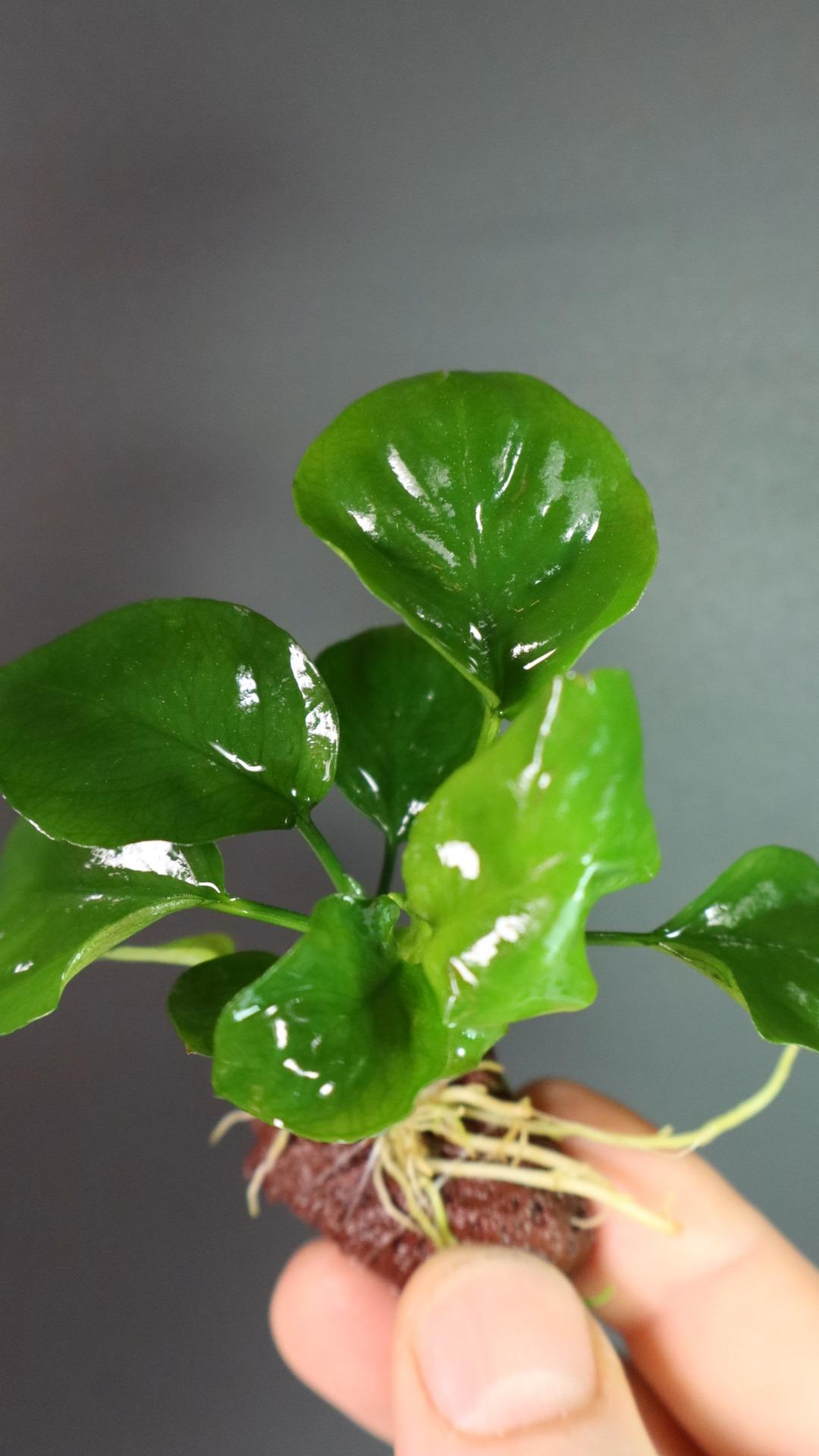
Anubias Coin Leaf – Anubias barteri “Coin Leaf” is a compact, hardy rhizome plant known for its rounded, coin-shaped green leaves. Its small leaf form gives aquariums a clean, polished look and works especially well around rocks, driftwood, caves, and shaded foreground areas.

🌱 Beginner Level: Anubias Coin Leaf is an excellent choice for new aquarium hobbyists because it grows slowly, does not require CO₂, and tolerates low to medium lighting. At AquaPlantStore, this plant is sold attached to lava rock, making it easy to place directly into the aquarium without needing to plant it in substrate.

View full details

Ideal for Nature Aquarium, island layouts, nano aquascapes, betta tanks, shrimp tanks, and low-tech planted aquariums
Its rounded leaves create a soft, organized look that fits beautifully around stones, wood, and foreground hardscape.

Unique round “coin leaf” shape
The small circular leaves give this Anubias a different texture from longer-leaf plants like Java Fern, Cryptocoryne, or Vallisneria.

Ready to place on lava rock
Because the plant is already attached to lava rock, it can be placed directly into the aquarium as a finished accent piece. This is perfect for beginners, nano tanks, and aquascapes where clean placement matters.

Excellent for foreground and midground detail
Anubias Coin Leaf works well at the front edge of driftwood, between stones, beside caves, or as a small green island in open substrate areas.

Beautiful contrast with colourful fish and shrimp
The bright rounded leaves make red cherry shrimp, orange neocaridina shrimp, blue dream shrimp, ember tetras, chili rasboras, neon tetras, galaxy rasboras, guppies, and bettas stand out clearly. Red, orange, blue, and black-patterned fish look especially sharp against the clean green foliage.

Pairs well with many aquascaping plants
Use it with Bucephalandra Kedagang, Bucephalandra Green Wavy, Cryptocoryne parva, Cryptocoryne wendtii Brown, Helanthium tenellum, Monte Carlo, Taiwan Moss, Spiky Moss, Rotala H’ra, or Limnophila sessiliflora to create contrast between rounded leaves, fine textures, and taller background growth.

Origin: West and Central Africa

Type: Rhizome plant attached to lava rock

Growth Rate: Slow

Size: Height: 5–15 cm / 2–6 in Width: 5–15 cm / 2–6 in depending on age and growing conditions

Natural Habitat: Anubias species naturally grow along shaded tropical streams, riverbanks, and wet forest margins. They often attach to rocks, roots, and hard surfaces where water movement is gentle and light is filtered by surrounding vegetation.

Special Considerations:
Do not bury the rhizome. The rhizome is the thick horizontal stem where leaves and roots grow from, and it must stay exposed. Since this plant is sold on lava rock, simply place the rock in the aquarium and avoid covering the rhizome with sand, gravel, or aquasoil. Strong light can encourage algae on the slow-growing leaves, so low to medium light is usually best.

Did You Know?
Anubias plants are popular in aquascaping because they grow slowly and hold their shape for a long time. Coin Leaf is especially useful when you want a small, rounded-leaf accent that stays neat without frequent trimming.

Tank Size: Suitable for aquariums 20 L / 5 gallons or larger, including nano tanks, shrimp tanks, betta aquariums, and peaceful community tanks.

Plant Placement: Best used as a foreground to midground attached plant. Place the lava rock near driftwood roots, between larger stones, around caves, or along the front edge of a planted layout. It works especially well as a stable green accent beside darker hardscape and smaller plants such as Cryptocoryne parva, Bucephalandra Mini Belindae, Java Moss, Marsilea hirsuta, or Monte Carlo.

Compatibility: Suitable for peaceful freshwater aquariums with bettas, guppies, endlers, neon tetras, cardinal tetras, ember tetras, chili rasboras, harlequin rasboras, celestial pearl danios, honey gouramis, Corydoras, kuhli loaches, Otocinclus, shrimp, and snails. Its firm leaves are useful in betta tanks as resting surfaces, while shrimp often graze biofilm from the leaf surface and lava rock.

Substrate: Substrate is not required because the plant is already attached to lava rock. The lava rock can be placed on sand, gravel, aquasoil, or directly between aquascaping stones. Do not bury the rhizome.

Light: Low to medium (15–45 PAR).

Temperature: 22–28°C / 72–82°F

pH: 6.0 – 7.8

GH: 3–15 dGH

CO₂: Not required.

Care & Propagation:
Remove old, yellowing, or algae-covered leaves close to the rhizome using clean scissors. To propagate, the rhizome can be divided into sections once mature, with each section keeping healthy leaves and roots. Growth is slow, so avoid frequent disturbance after placement.

Portion Size: 1 carefully selected Anubias Coin Leaf attached to lava rock, freshly packed and ready for aquarium placement.

Plant Size: Small to medium rhizome plant with rounded green leaves attached to a piece of lava rock. Size may vary depending on current stock.

Plant Type: Rhizome aquarium plant on lava rock. Ready to place directly into the aquarium.

Snail-Free & Aquarium Safe: Plants are grown without chemicals that could harm fish, shrimp, or other aquarium inhabitants and are carefully inspected to ensure they are snail-free.

Transition After Shipping:
Some older leaves may yellow, soften, or change appearance after shipping as the plant adapts to new aquarium conditions. This is normal. Anubias grows slowly, so new leaves may take time, but a healthy rhizome usually adapts well.

Planting Guide

  1. Remove the protective plastic packaging.
  2. Rinse the plant and lava rock gently with clean water.
  3. Place the lava rock directly into the aquarium.
  4. Do not bury the rhizome in sand, gravel, or aquasoil.
  5. Position it in low to medium light, preferably near hardscape or partial shade.
  6. Leave space around the leaves for gentle water movement.
  7. Avoid placing it directly under very strong light until it is established.

Tip
Use Anubias Coin Leaf as a small green anchor point around lava rock, driftwood, or cave entrances. Its rounded leaves look especially clean beside fine-textured plants like Monte Carlo, Rotala H’ra, or Taiwan Moss, while colourful shrimp and small schooling fish stand out beautifully against the bright green leaf shape.