Ludwigia palustris “Super Red”
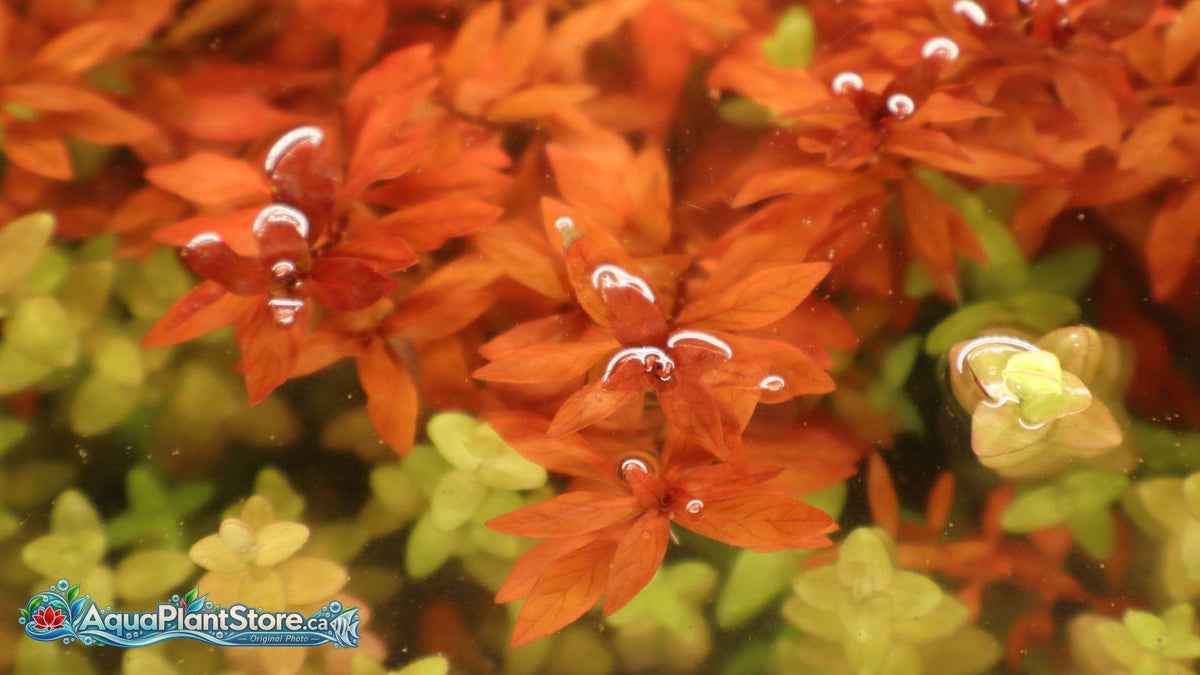
✨ Ludwigia Super Red – Ludwigia palustris “Super Red” is a vibrant red stem plant valued for its strong red, orange-red, and sometimes deep ruby tones. It is one of the most effective plants for adding bold colour contrast to planted aquariums without needing the extreme difficulty level of many delicate red species.
🌿 Advanced Level: Ludwigia Super Red is more forgiving than many red aquarium plants, but it still performs best with stable nutrients, medium to high light, and regular trimming. It can grow in low-tech aquariums, but stronger colour, shorter internodes, and bushier growth are usually achieved with better lighting, consistent fertilization, and optional CO₂.

Ideal for Nature Aquarium, Dutch, triangular, island, and colour-contrast aquascapes
Its intense red foliage creates a strong visual focal point and helps separate green plant groups in structured aquascapes.
One of the most useful red stem plants for hobbyists
Ludwigia Super Red gives strong colour impact while staying easier than many demanding red plants, making it a great choice for aquarists moving into more colourful layouts.
Excellent red-green and red-dark contrast plant
Plant it beside Hydrocotyle tripartita, Staurogyne repens, Monte Carlo, Cryptocoryne lucens, Bucephalandra Ghost Brownie, or Anubias Coffeefolia on Lava Rock to make the red leaves stand out clearly.
Works as a trimmed bush or tall background group
In nano tanks, it can be trimmed into a compact red midground bush. In larger aquariums, it can be grown as a background group to create height, colour, and depth.
Strong colour contrast with fish and shrimp
The red foliage makes blue, silver, yellow, orange, and black-patterned livestock stand out, including neon tetras, green neon tetras, rummynose tetras, black neon tetras, harlequin rasboras, celestial pearl danios, honey gouramis, panda Corydoras, blue dream shrimp, yellow neocaridina shrimp, Amano shrimp, and red cherry shrimp.
Origin: Aquarium cultivar/selection of Ludwigia palustris
Type: Stem plant
Growth Rate: Medium to fast
Size:
Height: 10–30 cm / 4–12 in
Width: 3–6 cm / 1–2.5 in per stem; wider when planted and trimmed as a group
Natural Habitat:
The wild Ludwigia palustris species is naturally associated with wetlands, marshes, pond edges, shallow ditches, and slow-moving waterways. It can grow both emersed and submerged, which helps explain why it adapts well to aquarium conditions once established.
Special Considerations:
Ludwigia Super Red needs enough light and nutrients to keep strong colour. In lower light, new growth may become greener, taller, or more spaced out. If nutrients are unstable, older leaves may develop holes, melt, or drop. For best results, avoid extreme nutrient starvation. Balanced macro and micro fertilization usually produces healthier long-term growth than trying to force red colour by limiting nutrients too aggressively.
Did You Know?
Ludwigia Super Red is often used as a “transition red” plant for hobbyists who want to move beyond easy green stems but are not ready for very demanding expert plants. Its colour can shift depending on conditions: lower light may produce orange-red or greenish tones, while stronger light and stable nutrition can bring out deeper red and ruby shades.
Tank Size: Suitable for aquariums 20 L / 5 gallons or larger, but it looks best when planted in groups rather than as a single stem. In small tanks, use it as a compact red accent. In larger tanks, use larger groups for stronger colour impact.
Plant Placement: Best used as a midground to background stem plant. Plant Ludwigia Super Red slightly off-centre rather than directly in the middle of the aquarium for a more natural aquascape composition. It works beautifully behind lower plants such as Staurogyne repens, Cryptocoryne lucens, Marsilea hirsuta, Hydrocotyle tripartita, Monte Carlo, or Helanthium tenellum.
For stronger Dutch-style contrast, place it beside green vertical stems such as Bacopa caroliniana, Pogostemon stellatus, Limnophila sessiliflora, Hygrophila polysperma, or Rotala indica. For a softer Nature Aquarium look, combine it with darker hardscape, Cryptocoryne wendtii Brown, Java Fern Narrow Leaf on Lava Rock, or small Bucephalandra varieties.
Compatibility: Suitable for peaceful community aquariums with tetras, rasboras, danios, gouramis, guppies, endlers, Corydoras, kuhli loaches, Otocinclus, shrimp, and snails.
For colour contrast, Ludwigia Super Red looks especially strong with:
- Blue fish: neon tetras, green neon tetras, blue bettas, blue guppies
- Silver fish: rummynose tetras, silver tip tetras, lambchop rasboras
- Yellow/orange fish: honey gouramis, ember tetras, sunset platies, orange neocaridina shrimp
- Black-patterned fish: panda Corydoras, black neon tetras, kuhli loaches
- Shrimp tanks: blue dream shrimp and yellow shrimp stand out strongly against the red leaves, while cherry shrimp create a more intense red-on-red effect
Avoid keeping delicate stem plants with fish that frequently uproot or damage plants. Large digging cichlids or goldfish may disturb newly planted stems.
Substrate: Can grow in aquasoil, sand, or gravel. Nutrient-rich substrate helps support stronger root development, but Ludwigia Super Red also feeds well from the water column. In inert gravel or sand, regular liquid fertilizer is important, and root fertilizer capsules can help improve long-term growth.
Light: Medium to high (40–80+ PAR). Medium light can maintain healthy growth, while higher light encourages stronger red colour, shorter spacing between leaves, and more compact growth. Very strong light should be balanced with nutrients and CO₂ to avoid algae or stressed growth.
Temperature: 20–28°C / 68–82°F
pH: 6.0 – 7.5
GH: 3–12 dGH
CO₂: Not required, but recommended for best colour, compact shape, and faster recovery after trimming. In low-tech tanks, keep lighting moderate and nutrients stable to avoid weak lower stems.
Care & Propagation: Trim healthy tops and replant them into the substrate to create fuller groups. The original stems will often produce side shoots after trimming, making the plant bushier over time. Replant the brightest, healthiest tops and remove weak lower sections if the plant becomes too dense or shaded at the base.
Portion Size: 1 carefully selected stem bundle, typically 5–7 stems, freshly trimmed and ready for aquarium planting.
Plant Size: Stems are usually 5–10 cm / 2–4 in tall at the time of packaging.
Plant Type: Submerged-grown stem plant, ready to plant directly into aquarium substrate.
Snail-Free & Aquarium Safe: Plants are grown without chemicals that could harm fish, shrimp, or other aquarium inhabitants and are carefully inspected to ensure they are snail-free.
Transition After Shipping: Some leaves may soften, curl, melt, or change colour after shipping as the plant adapts to new aquarium conditions. This is normal for stem plants. Trim damaged leaves, plant the healthiest stem sections, and allow new submerged growth to develop.
Planting Guide
- Remove the protective plastic packaging.
- Gently remove the filter floss and rubber band holding the stems together.
- Rinse the stems gently with clean water.
- Separate the bundle into individual stems.
- Plant each stem about 2–3 cm / 1–1.5 in deep into the substrate.
- Leave small spacing between stems so light can reach the lower leaves.
- Place the group where it will receive medium to high light.
- Trim and replant healthy tops as the plant grows to build a fuller red bush.
Tip
For the strongest visual effect, avoid placing Ludwigia Super Red directly beside another strong red plant at first. Let it contrast against green, bronze, or dark plants instead. A group of Ludwigia Super Red behind Staurogyne repens, beside Cryptocoryne wendtii Brown, or in front of dark driftwood can create a much cleaner focal point than mixing too many red plants together.
Notify me when it's back in stock
Please indicate that you have read and agree to the Privacy Policy before submitting your data.
We will notify you when this product is available again. Your email address will not be shared with anyone else.