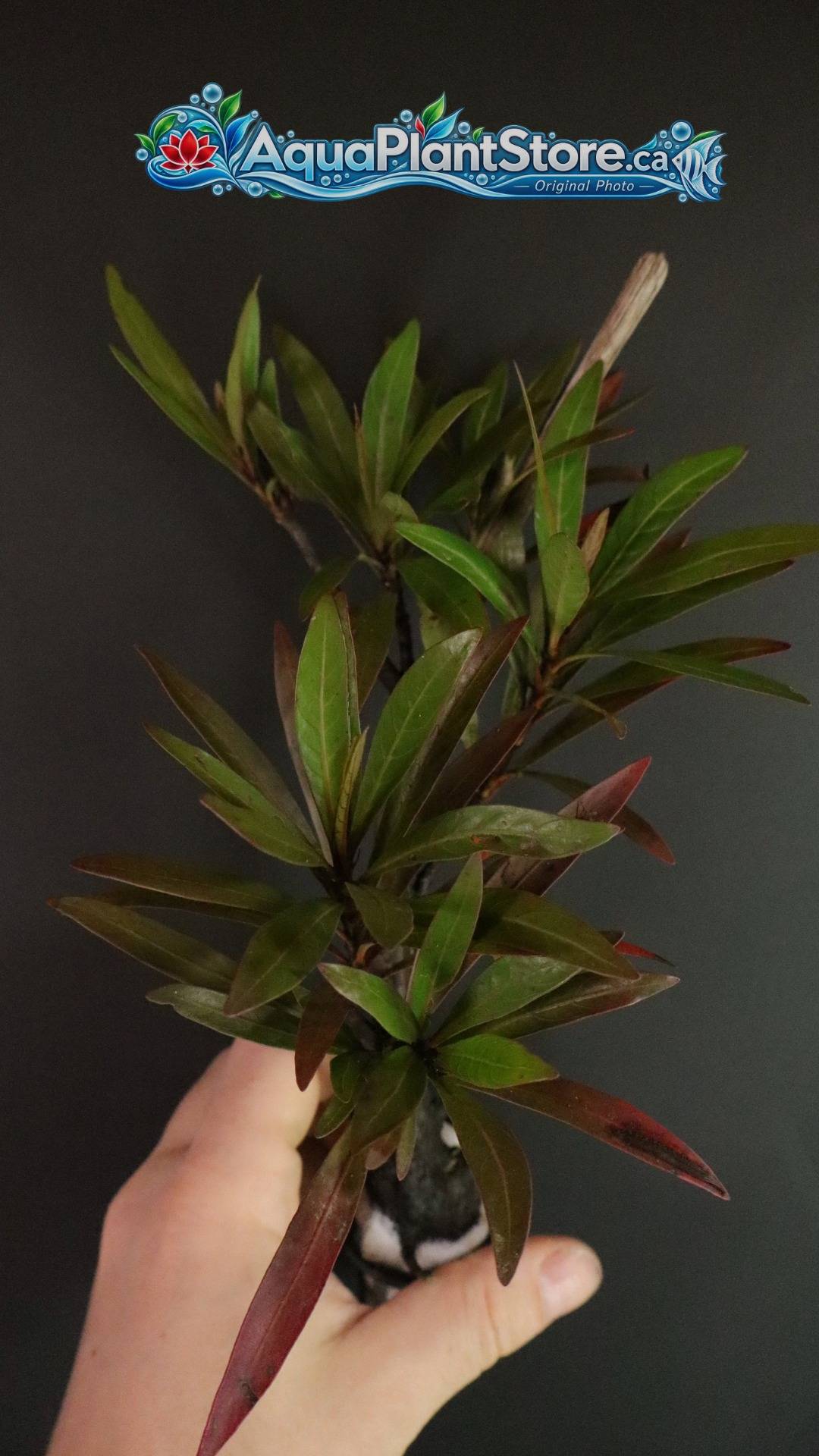
Mi Nuong – Homonoia riparia
✨ Mi Nuong – sold as Homonoia riparia is an unusual collector plant valued for its sculptural growth and fresh green foliage. Its shrub-like structure offers a distinctive alternative to familiar aquarium stems, creating an attractive transition between water, stone, driftwood, and the planted area above the waterline.
💎 Collector Variety — Riparium Care: Mi Nuong, sold as Homonoia riparia, is best presented as a specialist plant for ripariums, paludariums, and open-top displays. Position its foliage above the waterline with the roots securely anchored in a consistently moist root zone. Allow time for establishment and monitor new growth as it adapts. This care recommendation is for an emergent display and does not establish suitability for permanent complete submersion.

A distinctive specimen for collectors
Mi Nuong offers a different growth form from common aquarium plants. Its branching structure can serve as the main feature in a carefully arranged display, particularly when surrounded by simpler planting that allows its shape to remain visible.
Creates a natural connection between land and water
Position it beside partially exposed driftwood or a raised stone arrangement to suggest a planted riverbank. Let the foliage rise above the water while lower aquatic plants complete the scene beneath it.
Beautiful contrast with darker green foliage
Pair its fresh green appearance with Anubias Coffeefolia on Lava Rock, Anubias Coin Leaf on Lava Rock, Bucephalandra Ghost Brownie, or Java Fern Narrow Leaf on Lava Rock in the aquatic section. Their different leaf shapes can create an appealing layered composition.
Works with warm red and bronze accents
In the underwater portion of a mixed display, consider separate groups of Cryptocoryne wendtii Brown, Ludwigia Super Red, or Rotala H’ra. Keep the strongest colour group slightly away from Mi Nuong so both features remain easy to appreciate.
Adds height without filling the entire underwater background
An emergent specimen can draw the eye upward while leaving open swimming space below. Use a smaller group of Cryptocoryne lucens, Lobelia cardinalis Small Form, or Staurogyne repens near the base of the composition to create a gradual change in height.
Origin: Supplied from Vietnam; the botanical species Homonoia riparia is native to tropical and subtropical Asia.
Trade Name: Mi Nuong
Supplier Identification: Homonoia riparia
Type: Woody riparian specimen / emergent display plant
Growth Rate: Establishment and growth vary with the specimen and growing conditions.
Size:
Supplier size category: 25–30 cm / approximately 10–12 in
This is the supplied size category, not a guaranteed mature height. Allow additional room for future growth.
Natural Habitat:
Homonoia riparia occurs along rivers, rocky stream beds, and riverbanks. Its strong roots anchor it in places exposed to flowing water and changing water levels.
Special Considerations:
Plan for access to the root zone and enough space above the waterline. The species is a shrub in nature, so it should not be treated as a permanently compact foreground plant.
Did You Know?
A plant adapted to living beside strong currents is called a rheophyte. Homonoia riparia can withstand seasonal inundation in its natural habitat, where water levels rise and fall.
Tank Size:
Choose an open-top aquarium, riparium, or paludarium with space for the supplied 25–30 cm / 10–12 in specimen, its roots, and future growth. Vertical clearance and a suitable planting position are more useful guides than water volume alone.
Plant Placement:
Use as an above-water focal plant, with the root zone kept consistently moist and the foliage exposed to air.
Place it slightly off-centre beside raised driftwood, a planted ledge, or a stable stone arrangement. Leave space around the branches so the plant’s structure remains visible.
For a layered display, use:
- Near the waterline: exposed wood and stone to connect the planting areas.
- In the aquatic midground: Cryptocoryne wendtii Green, Cryptocoryne beckettii, or Anubias Coin Leaf on Lava Rock.
- Around submerged hardscape: Java Fern Narrow Leaf on Lava Rock, Bucephalandra, or Christmas Moss.
- In brighter underwater areas: Lobelia cardinalis Small Form, Staurogyne repens, or a separate red stem group.
Compatibility:
Combine with plants suited to each growing zone. Keep submerged species underwater and provide appropriate moisture and airflow for emerged planting. Choose fish and shrimp according to the aquatic section’s size, temperature, and water parameters.
Substrate:
Use a secure riparium planter or suitable planting pocket that supports the roots and maintains moisture. Avoid allowing the root system to dry out during establishment.
Light:
Medium light is a reasonable starting point based on supplier guidance. Ensure the above-water foliage receives light directly.
PAR:
A dependable species-specific PAR range has not been confirmed.
Temperature:
Supplier guidance: 20–28°C / 68–82°F
pH:
Supplier guidance: 6.0–7.5
GH:
A dependable species-specific dGH range has not been confirmed.
CO₂:
Injected CO₂ is unnecessary for foliage growing above water, where the leaves have access to atmospheric carbon dioxide.
Care & Propagation:
Prioritize establishment before pruning or attempting propagation. Remove clearly dead foliage, keep the plant stable, and monitor developing buds and roots. Detailed home propagation guidance for the plant sold under this trade name remains limited.
Portion Size:
1 carefully selected Mi Nuong plant
Plant Size:
From the supplier’s 25–30 cm / 10–12 in size category. Individual height, branching, root development, and leaf count may vary.
Plant Type:
Riparian specimen supplied under the trade name Mi Nuong and supplier identification Homonoia riparia.
Preparation:
Plants are carefully cleaned and inspected before packing.
Transition After Shipping:
Some leaves may yellow, soften, or drop following transport and changes in growing conditions. Remove deteriorating foliage and monitor the stems, buds, and roots for signs of healthy new growth. Avoid repeatedly moving the plant during establishment.
Planting Guide
- Carefully remove the protective packaging.
- Inspect the plant and gently rinse away loose packing material.
- Remove clearly damaged or decomposing material.
- Prepare a stable riparium planter or suitable moist planting pocket.
- Position the plant securely without crushing its roots or stems.
- Keep the foliage above the waterline for the recommended emergent setup.
- Provide medium light and prevent the root zone from drying out.
- Monitor new growth before making major changes to its position or care.
Tip
Use Mi Nuong as the main above-water feature and keep the surrounding arrangement simple. Dark driftwood, a few well-positioned stones, and a low green planting group can make its natural structure more noticeable.
Notify me when it's back in stock
Please indicate that you have read and agree to the Privacy Policy before submitting your data.
We will notify you when this product is available again. Your email address will not be shared with anyone else.