Skip to product information
1 of 3

Phyllanthus fluitans - "Red Root Floaters"

Phyllanthus fluitans - "Red Root Floaters"

AquaPlantStore Price
$7.99
Shipping across Canada
Sold out

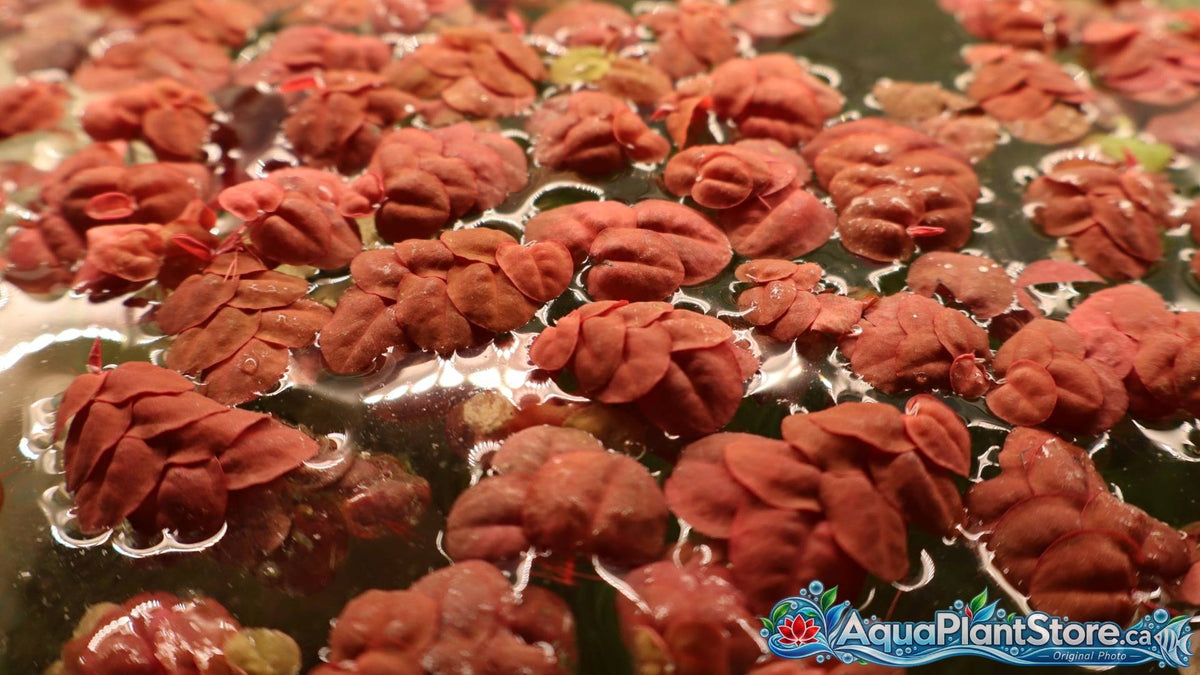
✨ Red Root Floaters – Phyllanthus fluitans are colourful floating plants valued for their delicate rounded leaves and striking red roots. Their foliage can range from fresh green to pink, copper, and deep red depending on growing conditions, adding colour both above and below the water’s surface.

🍃 Easy Level: Red Root Floaters grow without substrate or injected CO₂, but their surface conditions need attention. Keep the upper leaves above water, avoid persistent splashing, and provide gentle surface movement with adequate light and nutrients. Thin crowded growth regularly. Leaf colour can remain green or develop pink to red tones depending on conditions.

View full details

Ideal for Nature Aquarium, jungle, island, and pond-style aquascapes
Red Root Floaters bring colour to the surface while their hanging roots extend the planting into the water below. Position a contained patch above branching driftwood, along the sheltered side of an island layout, or above a planted corner to create a natural canopy without covering the entire aquarium.

Distinctive red roots with changing leaf colours
Even when the leaves remain green, reddish roots provide an attractive detail beneath the surface. Under suitable brighter lighting, the foliage may develop pink, copper, or red tones. View them from above to appreciate the floating leaves, or from the side to enjoy the contrast between the canopy and hanging roots.

Excellent contrast with green and dark-leaved plants
Combine them with Anubias Coffeefolia on Lava Rock, Java Fern Narrow Leaf on Lava Rock, Cryptocoryne lucens, Cryptocoryne wendtii Brown, or Bucephalandra Ghost Brownie. The rounded floating leaves contrast with narrow fern foliage, while red roots stand out against green Anubias leaves and dark driftwood.

Beautiful colour combinations with fish and shrimp
Red roots and warm-toned foliage complement neon tetras, green neon tetras, blue guppies, honey gouramis, harlequin rasboras, blue dream shrimp, yellow neocaridina shrimp, and Amano shrimp. Blue fish provide a cool contrast against reddish foliage, while yellow shrimp stand out among the roots. Red cherry shrimp create a coordinated red-and-green display when the leaves remain green.

Natural shelter and additional grazing surfaces
The root network adds structure for small fish and fry and provides surfaces where biofilm can develop for shrimp to explore. In an appropriately stocked betta or gourami aquarium, a controlled floating patch can create a sheltered corner while leaving clear access to open water.

Origin: Tropical South America

Type: Free-floating plant

Growth Rate: Medium to fast under suitable conditions

Size:
Leaves: generally around 1–2 cm / 0.4–0.8 in across
Roots: usually several centimetres long; length varies with growing conditions
Spread: develops branching floating groups that expand across the surface

Natural Habitat:
Phyllanthus fluitans is native to tropical South American freshwater habitats, including the Amazon basin. It grows in sheltered areas where floating leaves can remain at the surface and roots hang into the water.

Special Considerations:
Red Root Floaters are sensitive to repeated splashing, strong surface turbulence, and being pushed underwater. Position them away from waterfall-style filter outlets and avoid persistent condensation dripping onto the foliage.

Do not deliberately starve the plant to force red colour. Nutrient limitation can weaken growth, even if it changes pigmentation. Healthy green leaves are normal and do not mean the plant is failing.

Did You Know?
Despite their common name, Red Root Floaters do not always have red leaves. Green foliage with red roots is a normal appearance. Established plants may also produce tiny white flowers near the leaf bases.

Tank Size: Suitable for nano aquariums and larger freshwater tanks with enough open surface space. In small aquariums, keep a modest contained patch. In larger displays, use groups to frame the aquascape without forming a continuous dense canopy.

Plant Placement: Best used as a floating surface plant in a sheltered area with gentle water movement. A floating ring or airline barrier can prevent plants from drifting beneath filter outlets.

For a layered Nature Aquarium look, position them above Anubias Coffeefolia on Lava Rock, Java Fern Narrow Leaf on Lava Rock, or Cryptocoryne wendtii Brown.

For stronger colour separation, combine a red-toned floating patch with green submerged plants such as Bacopa caroliniana or Cryptocoryne lucens. Keep the surface above Monte Carlo, Ludwigia Super Red, and other light-demanding plants open enough to maintain their lighting.

Compatibility: Suitable for peaceful freshwater communities with tetras, rasboras, gouramis, guppies, endlers, Corydoras, kuhli loaches, Otocinclus, shrimp, and snails, provided their individual requirements are met.

For colour contrast, Red Root Floaters look especially attractive with:

  • Blue fish: neon tetras, blue guppies, and blue bettas
  • Silver fish: rummynose tetras and black neon tetras
  • Yellow/orange fish: honey gouramis and ember tetras
  • Black-patterned fish: harlequin rasboras and celestial pearl danios
  • Shrimp tanks: blue dream and yellow neocaridina shrimp contrast with reddish roots; cherry shrimp complement green foliage

Keep open surface access for bettas and gouramis. Goldfish and other plant-eating fish may damage or consume the plants.

Substrate: None required. Leave the plants floating with the roots hanging freely. Do not bury the roots or attach the plants to hardscape.

Light: Medium to high for stronger red colour. Moderate light can maintain greener growth. Light reaches these plants directly at the surface, so increase intensity gradually and monitor leaf condition rather than using substrate PAR as a guide.

Temperature: 21–28°C / 70–82°F

pH: 6.0–7.5

GH: Approximately 2–15 dGH

CO₂: Not required. The leaves have access to atmospheric carbon dioxide.

Care & Propagation: Separate healthy branching groups and return them to the water surface. Thin regularly so leaves remain uncrowded and light reaches the submerged planting.

Remove deteriorating leaves and monitor new growth. If the plants become pale or stop spreading, check nutrients, lighting, and whether the leaves are being repeatedly wetted. Balanced liquid fertilizer may be helpful in lightly stocked aquariums.

Portion Size: One portion of live Red Root Floaters. 4oz cup.

Plant Size: Small floating plants with developing or established roots. Leaf size and root length vary naturally.

Plant Type: Surface-grown floating plant, ready to place directly on aquarium water.

Snail-Free & Aquarium Safe: Plants are grown without chemicals that could harm fish, shrimp, or other aquarium inhabitants and are carefully inspected to ensure they are snail-free.

Transition After Shipping: Some leaves may soften, discolour, or melt after shipping, and delicate roots may shorten or detach. Remove damaged material and allow healthy new leaves and roots to develop. Plants may arrive greener than pictured; colour depends on growing conditions.

Planting Guide

  1. Remove the protective packaging.
  2. Gently transfer the plants into a clean container of aquarium water.
  3. Separate tangled groups carefully without pulling on the roots.
  4. Remove damaged leaves and deteriorating material.
  5. Place the plants on the aquarium surface with leaves facing upward and roots hanging down.
  6. Choose a calm area away from splashing and strong filter flow.
  7. Leave space between groups for new growth.
  8. Thin regularly and maintain open areas for feeding and surface access.

Tip
For a strong visual effect, place Red Root Floaters above a green planting group rather than directly above another red focal point. Their roots look particularly attractive in front of Anubias Coffeefolia on Lava Rock, beside narrow Java fern leaves, or against dark driftwood. A small controlled patch often creates a clearer composition than a fully covered surface.